

Online stores
An online store is not a catalogue with pictures. It is your till, your warehouse and your customer service, running around the clock. We build stores on WooCommerce and OpenCart with card payments, instalment buying and stock that comes straight from the warehouse, so you never sell what you do not have.
- Linked to your warehouse
- Payments and instalments
- Checkout on a phone
24/7support when the store is your main channel
Our approach
A store that sells, not just displays
Launching an online store is easy these days. There are templates, plugins, ready-made platforms. The hard part comes afterwards. A customer orders an item that sold out three days ago. The card payment goes through but the order never appears in your system. Prices online and in the shop do not match. The courier never got the details. Each of these costs a sale, and sometimes a customer.
We treat the store as part of your whole trading operation rather than as a separate website. Where items and prices come from, where orders go, who handles them, how they are invoiced and shipped: all of that shapes how the store is built, far more than the choice of template.

Benefits
What you get
A store connected to payments, couriers and the warehouse from day one — not bolted on after launch.
WooCommerce or OpenCart
The platform is chosen to fit your catalogue and process, not out of habit.
Linked to your warehouse
Stock and prices flow in automatically, so you never sell what is not there.
Payments and instalments
Stripe, bank payment modules and buy-now-pay-later such as TBI Bank.
Checkout on a phone
A basket and checkout with minimal steps, designed for mobile first.
Couriers and delivery
Labels from the order, delivery cost in the basket, and tracking.
Tested before launch
Test orders with every payment method, refunds and cancellations.
Stores we have built
We have built stores in a range of niches — computer hardware, car parts, mobile phones, cosmetics. Some examples:
- ITsector.bg, an OpenCart store with TBI Bank instalment purchasing built in.
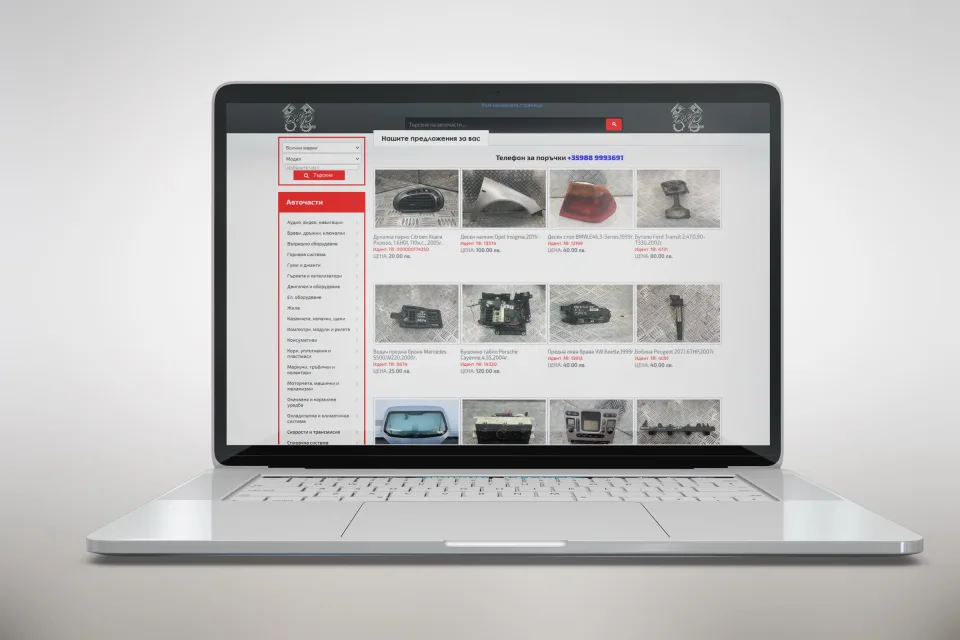
- DND-Parts.com, a car-parts store, covering design, development and project management.
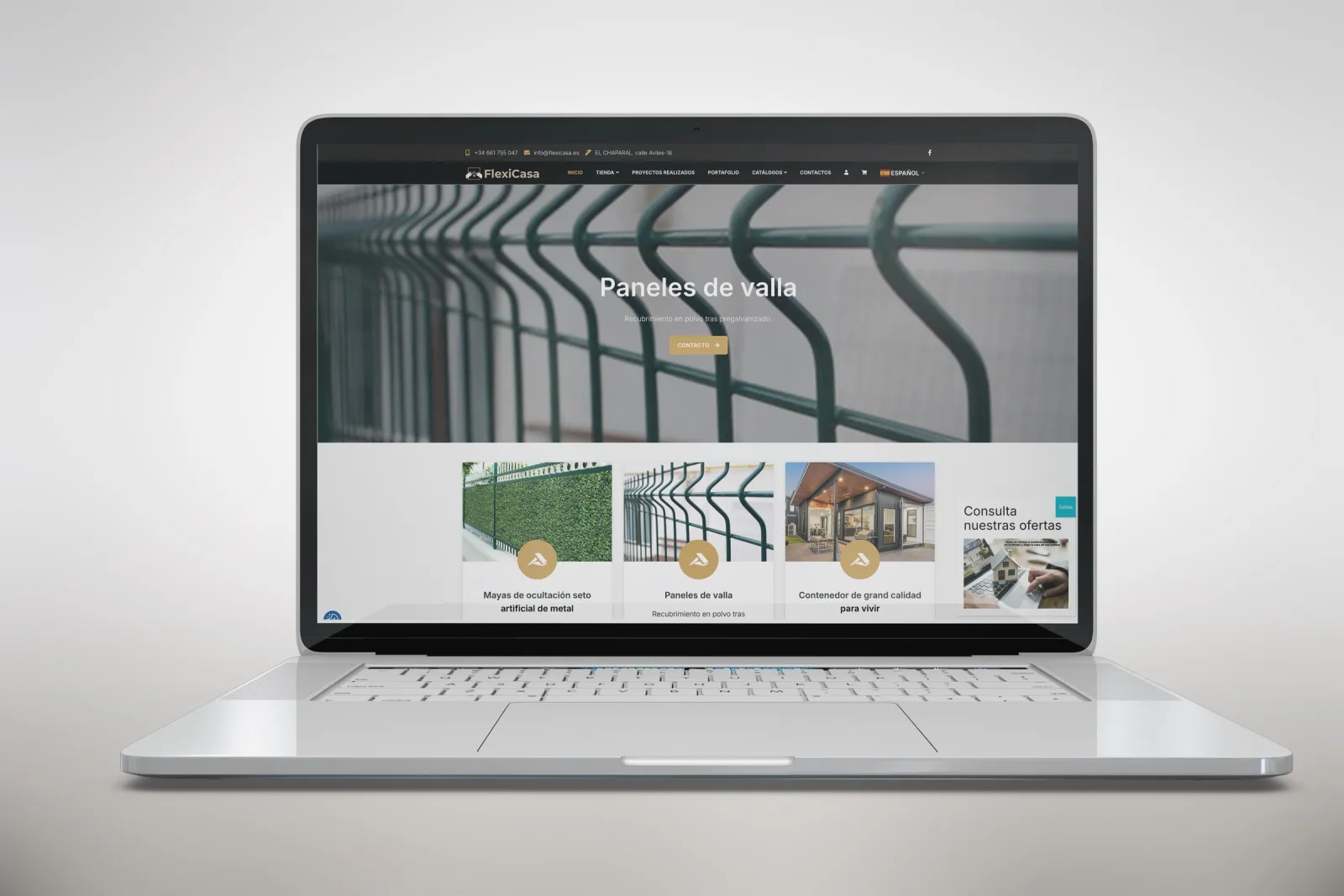
- FlexiCasa.es, on WordPress, with Stripe payments and REST API links to outside systems.
- Fitmama.bg, a WooCommerce store we designed and developed.
- Lorieta beauty, a cosmetics store with online payments.
- Gago GSM and Masis.BG, both on OpenCart.
WooCommerce or OpenCart
WooCommerce runs on WordPress and is a good fit when the store sits alongside a lot of content: a blog, articles, guides, brand pages. Many people already know how to edit it, and its plugins cover almost every need. OpenCart is tidier and built purely for selling. It copes well with large catalogues full of variants and filters, such as car parts, electronics and spares.
We do not recommend either out of habit. The choice depends on the size of the catalogue, how much content there will be beyond products, which systems the store has to talk to, and who will look after it. If neither platform fits — for example, when the store is just a shop window onto a large warehouse or B2B system — we build a custom solution tied directly into it.
Speed matters too. A store with thousands of products and a dozen plugins easily turns sluggish, and every second of waiting on a phone loses buyers. So we watch how many requests each page makes, cache the catalogue and never add a plugin without checking what it costs in speed.
Payments, instalments, couriers, stock
This is where most of the real work lies. We connect the store to:
- Card payments, through Stripe or your bank's payment module, with proper handling of failed and refunded payments.
- Instalment buying and leasing, such as TBI Bank, so customers can apply straight from the basket.
- Couriers: a shipping label created from the order, delivery cost shown in the basket, tracking for the customer.
- Warehouse and ERP: stock and prices that update automatically, and orders that go straight into processing.
- Accounting and invoicing: an invoice or receipt with no retyping.
How the build runs
We start with the catalogue and the process, not the design. How many items you carry, what variants they come in — size, colour, pack size — where the descriptions and photos come from, and how an order is handled from payment to delivery. Then we work out the category structure and filters, because that is how customers find products.
We show the design as a prototype on a phone, since that is where most orders come from. The basket and checkout matter most: the fewer steps and fields, the fewer abandoned baskets. Before launch we run test orders with every payment and delivery method, including a refunded payment and a cancelled order, to be sure everything ends up where it should.
There are also legal must-haves that often get forgotten: terms and conditions, a privacy policy, information on the 14-day right of withdrawal, cookie consent and the trader's details in plain view. The legal wording itself should be checked by a lawyer, but we make sure each item appears where the law requires and that customers accept it at the right point in checkout.
If you have an existing store, we migrate the products, customers and order history, and redirect old product URLs to the new ones so you keep your search rankings.
After launch
A store needs more care than an ordinary website. The platform and plugins update often, payment providers and couriers change their APIs, and the holiday season puts the server under load. Support covers updates, backups, monitoring of payments and orders, speed checks and fixes. When the store is your main sales channel, support runs 24/7. We also train your team on adding products, handling orders, running promotions and reading the reports.
The process
From catalogue to first order
Five steps, each with a result you see and approve before we move on.
Catalogue and process
Items, variants, stock and the path of an order from payment to delivery.
Categories and prototype
Structure, filters and a phone-first design, with the basket in focus.
Build and connect
The platform, payments, couriers and warehouse, all linked up.
Test orders
Every payment and delivery method, including refunds and cancellations.
Launch and training
Your team knows how to add products, process orders and run promotions.
Technologies
What we work with
- WooCommerce
- WordPress
- OpenCart
- Stripe
- TBI Bank
- PHP
- MySQL
- REST API
- jQuery
- Linux
Questions
Frequently asked questions
How much does an online store cost?
Mostly it depends on the connections — warehouse, payments, couriers, accounting — and on the size of the catalogue. The store itself, on an established platform, is the cheapest part. After talking through your process we give you a written estimate broken into parts.
Can we take card payments and instalments?
Yes. We connect Stripe or your bank's payment module, as well as instalment buying such as TBI Bank. You sign the contracts with the bank or payment provider; we handle the technical side.
Will stock levels update on their own?
If your warehouse or ERP software allows access to its data, yes — automatically, in real time or on a schedule. If it does not, we find another route, such as a scheduled import.
We have an old store. Do we lose anything by switching?
We migrate products, customers and order history, and redirect old addresses so you keep your search rankings. We do a trial migration and check it with you first.
What do you need from us?
A product list, photos and descriptions if you have them, your bank and courier contracts, and someone who knows how orders are handled. If descriptions are missing, we can prepare them, including with AI help and your review.
Portfolio
Related projects





Selling online but processing orders by hand?
Tell us how an order runs today, from payment to delivery. We will show you what can happen on its own.
- Phone
- +359 895 629 012
- office@enter.bg
- Address
- Pernik, 2 Krasnodar St, Bulgaria